Panteia shares latest insights on the European Pillar of Social Rights at Brussels seminar
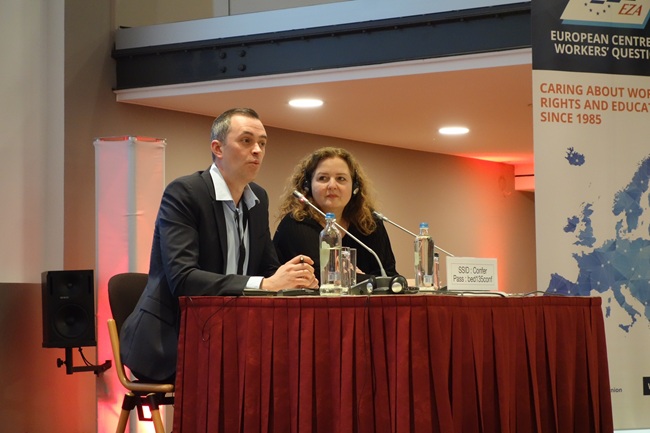
On 6 February 2026, Martin Clarke (Project Manager at Panteia) delivered a presentation in Brussels on the state of play of the European Pillar of Social Rights (EPSR) during the international seminar “The Declaration of La Hulpe: A guarantee for a Europe of values that is social and just?”.
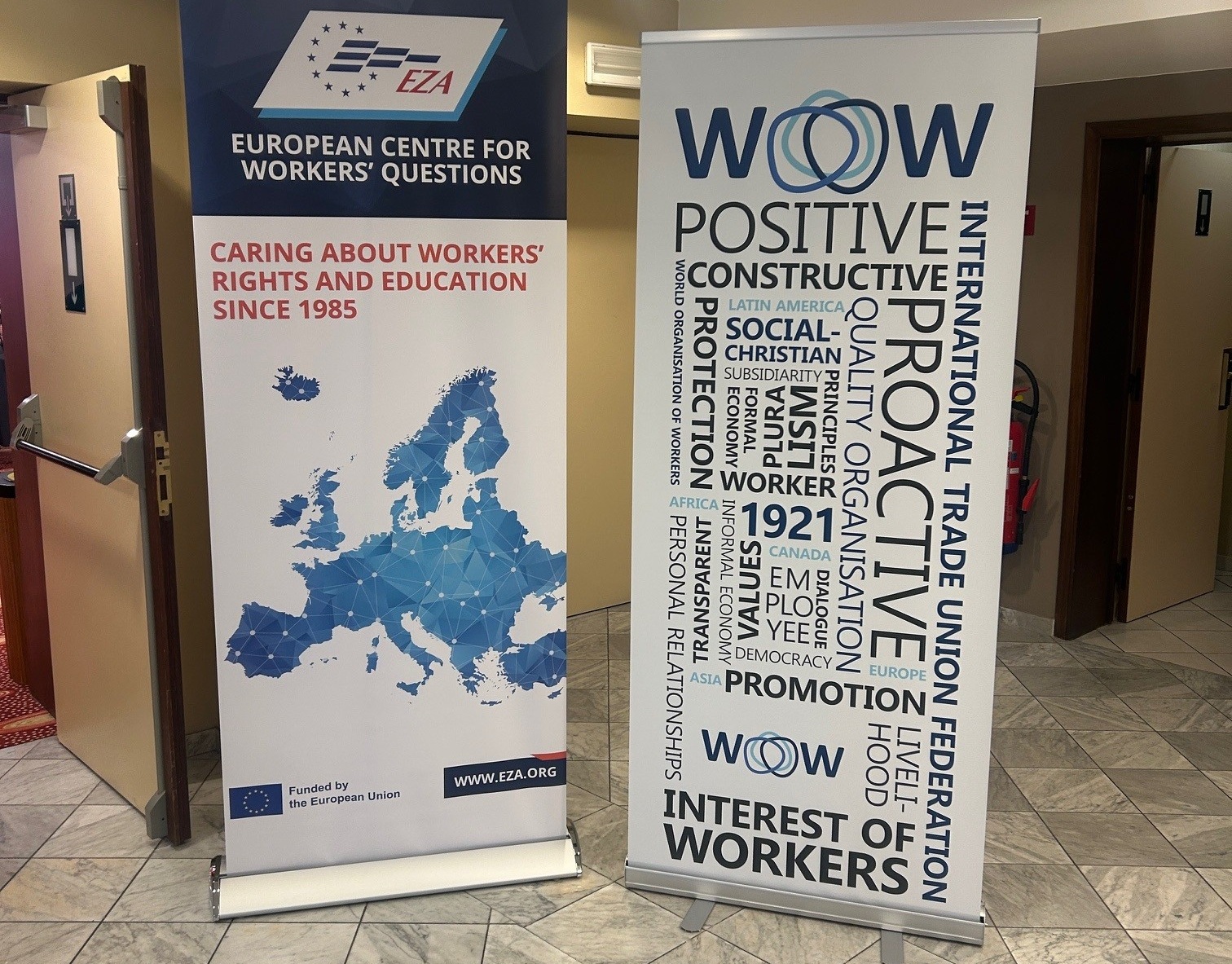
The seminar, hosted at the Bedford Hotel & Congress Center, brought together European experts, policymakers and social partners to discuss how the EU’s social agenda can remain a priority in an era increasingly shaped by competitiveness, security concerns and economic transition.
Results from a major comparative study across 14 EU Member States
In his presentation, Martin Clarke highlighted the findings of a recent comparative study assessing the transposition and implementation of four key EU directives linked to the EPSR:
- Transparent and Predictable Working Conditions Directive
- Work-Life Balance Directive
- Adequate Minimum Wages Directive
- Gender Balance on Company Boards Directive
The study covers 14 Member States (including the Netherlands, Belgium, Germany, France, Italy, Spain and Sweden) and explores not only legislative compliance, but also enforcement challenges, implementation gaps, and promising practices across Europe.
Key challenges: delays, uneven enforcement and gaps for non-standard workers
One of the main conclusions presented was that while progress has been made since the EPSR Action Plan was launched in 2021, implementation remains uneven across the EU. Many Member States missed transposition deadlines, while enforcement mechanisms often rely heavily on individual complaints and overstretched labour inspectorates.
The presentation also highlighted persistent gaps in coverage, particularly for platform workers, seasonal workers and other non-standard forms of employment, raising concerns about whether social rights are reaching those most at risk of precarious working conditions.
Competitiveness and social rights: trade-off or mutual reinforcement?
A central theme of the presentation was the growing debate around whether the EU’s competitiveness agenda conflicts with social objectives. Clarke argued that the real question is not “either competitiveness or social Europe,” but rather what kind of competitiveness model Europe chooses.
He underlined that a “high-road” approach—based on skills, fair wages, predictable contracts, gender equality and strong enforcement—can strengthen both productivity and social cohesion.
Policy recommendations for the future of Social Europe
The study also provides forward-looking recommendations, including:
- stronger national EPSR action plans linked to measurable indicators
- increased capacity for labour inspectorates and enforcement bodies
- improved awareness campaigns for workers and SMEs
- better use of EU funding and procurement to promote social standards
- a potential future EU Social Rights Enforcement Directive
Contributing to Europe’s social agenda
By contributing evidence and practical recommendations to the Brussels seminar, Panteia reinforced its role as a key research partner in the European social policy landscape. The presentation supported the wider debate on how the Declaration of La Hulpe and the European Pillar of Social Rights can be translated into concrete action for workers across the EU.
Panteia continues to support European institutions and stakeholders by delivering comparative research, policy evaluations and evidence-based guidance on labour market reforms and social rights implementation.
The results of the study on the ‘State of Play of the European Pillar of Social Rights’, which was carried out by Panteia for the European Economic and Social Committee, can be found here.
For more information, please contact Martin Clarke – Project Manager and Senior Researcher (Panteia) at m.clarke@panteia.nl.