The Future of European Transport: What Needs to Be Built and How Will It Be Funded?
Europe has set ambitious goals for 2050. The latest workplans of the European Commission have been published on 30 September presenting the priorities of European transport infrastructure in the period 2026 – 2030. In parallel, the new Multiannual Financial Framework (MFF) 2028 – 2034 is under negotiation and will set the allocation of public funds in the next financial term. A 2024 estimate shows that approximately EUR 845 bn will need to be invested in TEN-T projects in the next fifteen years, excluding additional investment required for climate resilience and maintenance. New funding sources are necessary to bridge the infrastructure funding gap in Europe. This article will look at the priorities set by the new TEN-T workplans, the new funding structure expected in the new MFF and how stakeholders can seize new opportunities of funding.
The building blocks of European Transport Policy
The Trans-European Transport Network (TEN-T) is the EU regulatory framework for transport policy. The revised TEN-T Regulation (EU) 2024/1679 establishes common infrastructure and operational requirements and organises the network around core, extended core and comprehensive networks, with implementation milestones in 2030, 2040 and 2050, respectively. The regulation defines nine European Transport Corridors (ETCs), which define the principal multimodal transport axes in the Union.
TEN-T corridor fora provide a multilevel governance mechanism for coordinating corridor development, facilitating stakeholder dialogue and supporting implementation across national borders. The Fora are complemented by specialised working groups and bodies such as Corridor Rail Freight Governance, including where relevant railway undertakings, terminals, ports and other users of the network.
The European Coordinators of the respective corridors brings these different strands together in a Corridor Work Plan, prepared every four years under Article 54 of the TEN-T Regulation. The Work Plan assesses the state of the Corridor, identifies gaps in compliance with TEN-T requirements, bottlenecks and projects at risk, and sets out priorities and milestones for implementation. These priorities shape funding allocation decisions.
Project priorities in the next 4 years
The workplans highlight missing links and infrastructure gaps where coordinated investments are most urgently needed. Cross-border connectivity and rail interoperability remain major challenges. Infrastructure resilience in response to natural and geopolitical hazards is becoming increasingly important alongside dual-use infrastructure, supporting both civilian and military use.
| Main priorities are the completion of critical cross-border missing links and advancing rail interoperability
1. Complete critical cross-border missing links
The interventions with highest priority are major cross-border sections. These sections suffer from insufficient capacity due to limited national interest in addressing those bottlenecks, and different technical and operational conditions between neighbouring countries. As a result, they have extended impact on the reliability of international journeys. Addressing cross-border links improve continuity across the network and strengthen connections between major nodes and economic regions. Prominent examples include Rail Baltica, the Brenner Base Tunnel, Lyon-Turin, Dresden-Prague, Seine-Scheldt, and the high-speed rail line Lisbon - Madrid.
2. Modernise rail and increase capacity
Rail is the dominant infrastructure priority across corridors in terms of allocated funding. For instance, rail investment absorbs €156.9 billion out of €188.4 billion in total ongoing costs in the Rhine–Danube Corridor, and €159.39 billion out of €190.70 billion in the Scandinavian–Mediterranean Corridor. Similar percentages are applicable to other corridors. Key interventions include additional tracks and double-tracking, electrification, accommodation of 740 m freight trains, upgrades in major urban nodes and logistics hubs, and expansion of high-speed passenger rail.
3. Deliver interoperability and ERTMS
Rail infrastructure upgrades must be accompanied by interoperability. Accelerated deployment of the European Rail Traffic Management System (ERTMS) and the European Train Control System (ETCS), particularly on cross-border sections, remains a central priority. The horizontal ERTMS Work Plan highlights the transition to FRMCS (Future Railway Mobile Communication System), and closer coordination between trackside and on-board implementation of ERTMS. In this regard, another objective is the development of the European gauge railway network.
4. Enhance ports, terminals and multimodal connections
Nodal infrastructure such as ports, inland ports, multimodal freight terminals, airports and urban nodes are the ‘beating hearts’ of corridor performance. Priorities include improved rail and road access to ports, electrified rail connections, terminal capacity, accommodation of 740 m freight trains, airport rail links and better last-mile connections. In this regard, examples include connecting Baltic ports (Tallinn, Riga and Muuga) to the standard UIC-gauge railway network through Rail Baltica and addressing rail connectivity gaps at Dutch inland ports (e.g. Nijmegen, Utrecht and Hengelo).
5. Increase resilience and dual-use capability
The Work Plans call for infrastructure that can better withstand climate and geopolitical disruptions. Examples of relevant measures include the MOSE flood barriers in the Venice Lagoon (Italy), the Delta Works (Netherlands), the Sigma Plan (Belgium) and the East Coast Railway Infrastructure Protection Projects (Ireland). At the same time, dual-use requirements will be integrated into TEN-T planning. Military equipment has special dimension and load requirements, demanding stronger bridges, adequate tunnel clearances and transfer equipment in ports and terminals. Military operation also has stringent requirements on alternative routing options in case of disruption.
6. Decarbonise transport and energy infrastructure
The transition to lower- and zero-emission transport remains a major horizontal priority. Measures include rail electrification, alternative-fuel and charging infrastructure, cleaner inland waterway and maritime transport, onshore power supply (OPS) in ports, and stronger integration between transport infrastructure and electricity and energy systems. The European Maritime Space Work Plan frames this agenda around four interconnected pillars: sustainability, digitalisation, connectivity and resilience, with ports evolving towards multimodal logistics and energy nodes.
7. Improve project delivery, funding and cross-border governance
A recurrent concern is the risk that important investments will miss the 2030 or 2040 TEN-T deadlines due to lengthy permitting procedures and limited synchronisation between neighbouring national projects. This can be illustrated by the case of Rail Baltica, in which progress remains uneven across the participating countries, hampering the completion of the project towards the 2030 deadline. The Work Plans propose a more active delivery model centred on project-specific milestone plans. Those can support implementation commitments between the Commission and Member States. Corridor Forums are expected to play a more operational role in resolving issues, supported by dedicated working groups for major projects. Administrative barriers are addressed through streamlined cross-border procedures.
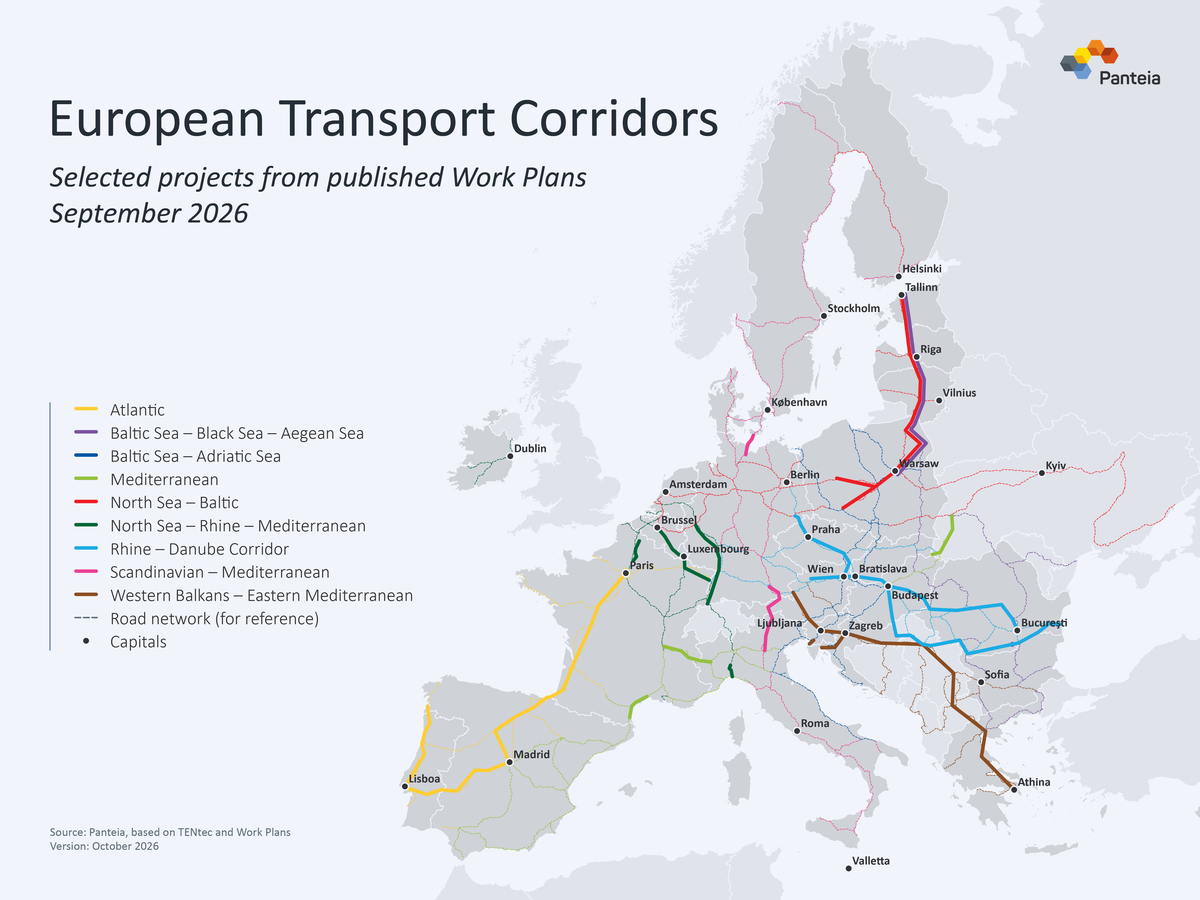
Figure: Examples of projects in the Work Plans. Elaborated by the authors.
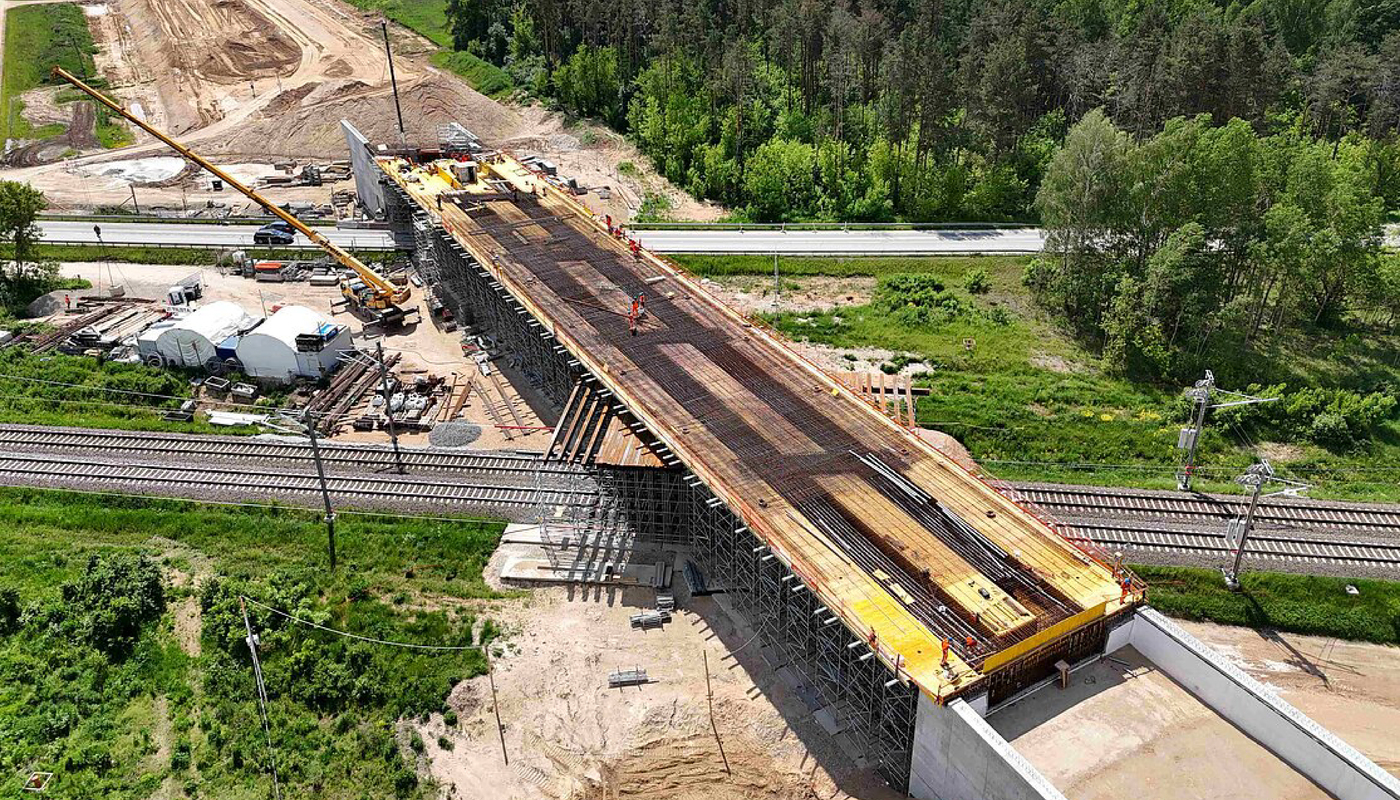
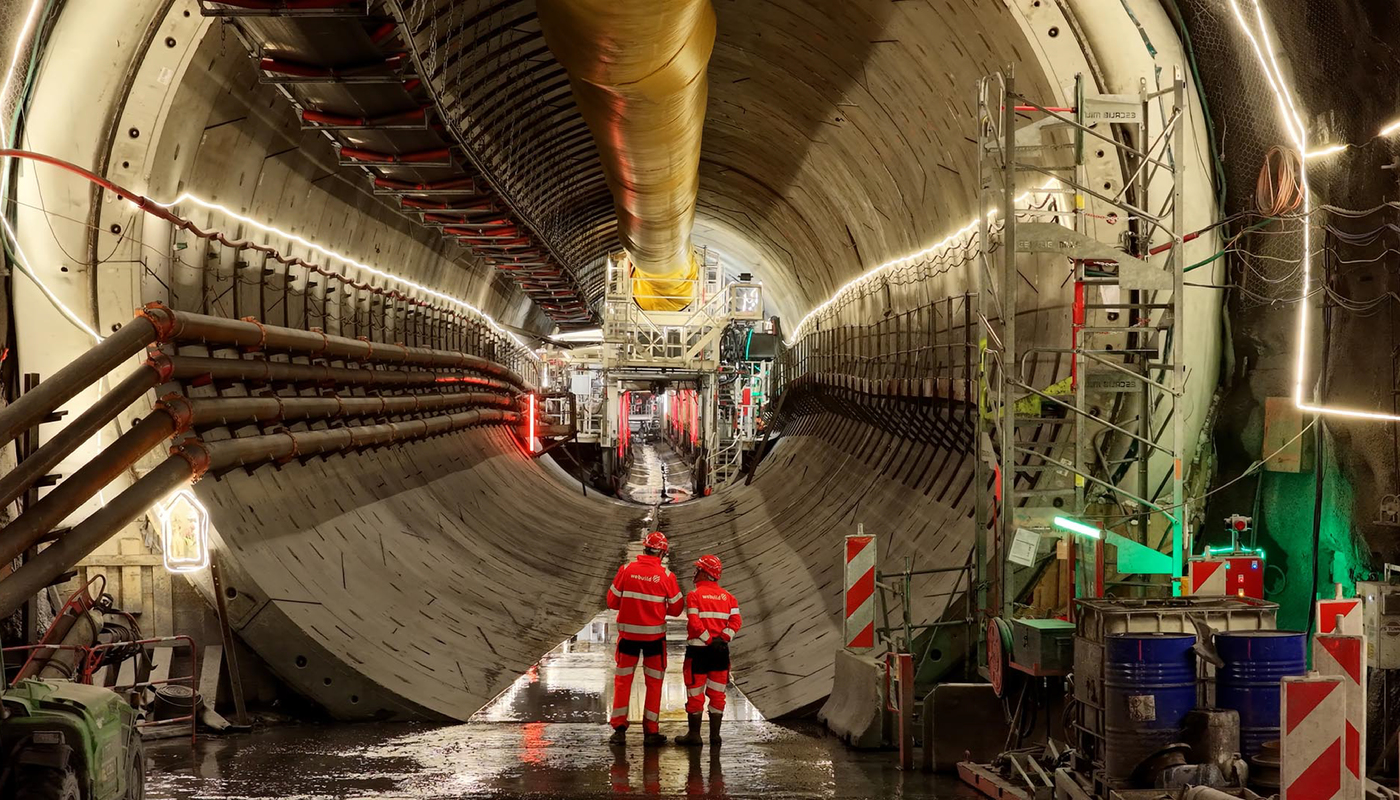
Rail Baltica construction works (source) Lyon – Turin rail link (source)
Funding opportunities for European stakeholders
The European funding landscape offers several complementary routes for stakeholders responsible for implement transport projects required by the TEN-T regulation and Work Plans. At the moment, the funding architecture is under negotiation, therefore the content here presented is based on experiences in the previous Financial term and ongoing negotiations for the new term.
Connecting Europe Facility (CEF)
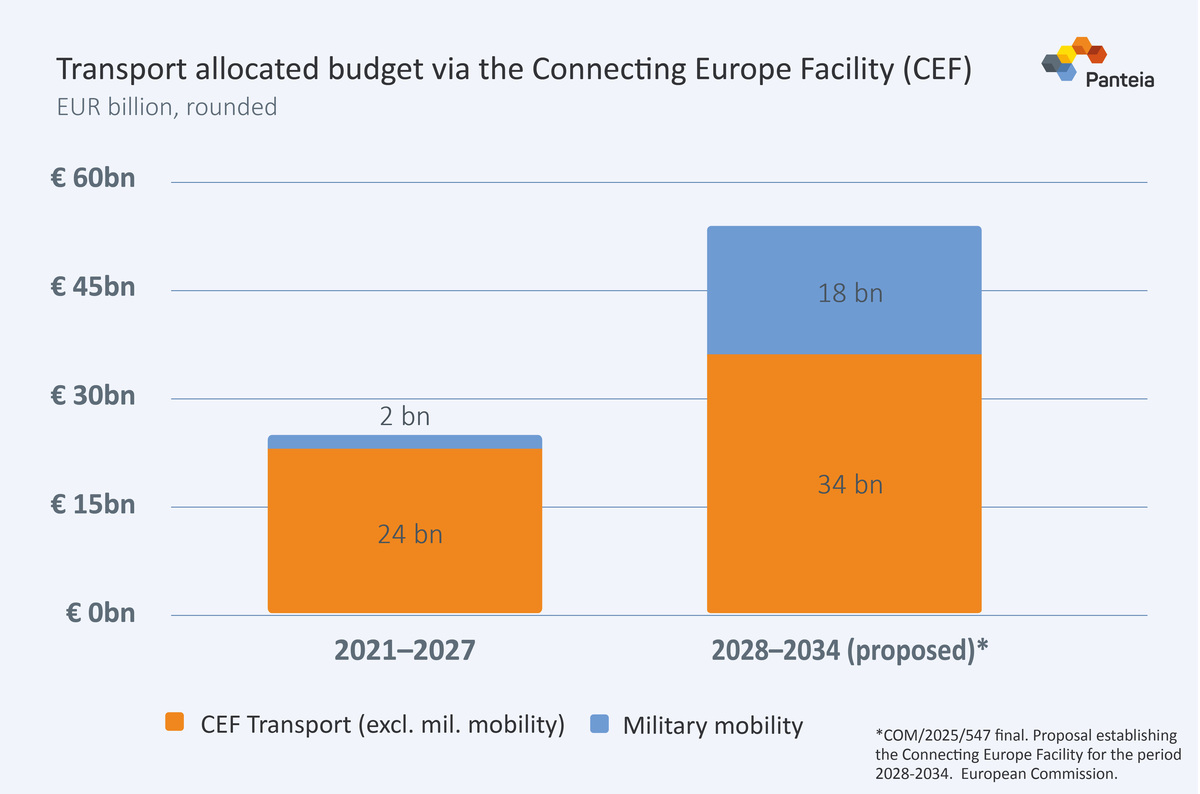
CEF remains the principal EU funding instrument for mature infrastructure projects with a clear European dimension, with a proposed budget of €51.5 billion, with €17.65 billion for military mobility and dual-use infrastructure. The basic CEF model will be maintained, consisting of competitive periodic calls for funding on specific topics. The future programme is expected to continue selecting projects on the basis of quality, maturity and EU added value. It is worth noting that CEF grants normally cover only part of eligible costs, with the remaining costs financed by the project promoter or other eligible sources including private investor and loans from the European Investment Bank (EIB).
Obtaining CEF funding require extensive preparation. A portfolio of projects should be identified and linked within an overarching ‘Global Projects’ that add a cross-border dimension and form a coherent long-term strategy. Strong partnerships between relevant stakeholders, particularly on both sides of the border, reinforce the credibility of the plan. Timing and project maturity should be considered strategically by seeking support first for studies and subsequently for works. A project pipeline should be built to match projects to the most appropriate calls as they become ready. Maturity is arguably the most important factor for success when applying for EU funding. Mature projects are ready to start when they are to receive their requested funding and thus have completed their permitting phase. Regarding preparation of the applications, it takes place in short timeframe, requiring close cooperation among representatives of participating institutions. These stakeholders should be involved early in project planning so that responsibilities are identified before an application is prepared.
Private investment
It is clear that public investment will not suffice to achieve the €845 billion necessary to complete the TEN-T network towards 2050. The European Coordinators endorse that private investment must be explored to its maximum to fill this gap. Major airports, roads, ports, freight terminals and passenger hubs are considered the most profitable types for private investment. They trigger a high utilisation rate and offer opportunities for investment in complementary activities such as retail and housing. On the other side of the spectrum are large and high-risk projects such as cross-border projects, tunnels, bridges and rail infrastructure, which contain high upfront costs and lack short-term profitability.
Public investment can act as a catalyst for private investment by de-risking. Public participation provides greater confidence in a project's long-term viability and is able to cover risks that the private sector is unable or unwilling to bear. The integration of public and private capital is known as blending. The InvestEU instrument, the European Investment Bank, infrastructure investment funds and pension funds could provide blending opportunities.
Nevertheless, private finance should not be regarded as a straightforward substitute for public funding. Pension funds and other investors are still exploring where and under what conditions transport infrastructure represents an appropriate investment. Therefore, it is essential to identify at an early stage which components of an investment programme may be suitable for private sector participation and to engage prospective investors during project development.
European Competitiveness Fund, Cohesion fund, Interreg and EIB loans
The European Competitiveness Fund, Cohesion fund and Interreg could support transport investment. However, they do not have a dedicated transport allocation, making it difficult to estimate the funding available in the new term. The actual possibilities will depend on the final MFF agreement. Negotiations suggest that Cohesion policy could provide approximately €90–110 billion for transport and mobility, but the fund might be integrated into the upcoming National and Regional Partnership Plans (NRPPs), where investment in transport will compete directly with other national investment priorities for funding. The European Competitiveness Fund focuses on industrial competitiveness, where decarbonisation technologies in transport will play a role. The contribution of Interreg tends to be negligible, with a small budget of €10.2 billion for all cross-border initiatives in the new term.
The European Investment Bank is expected to remain a major financing partner for transport infrastructure investments in the 2028–2034 period. Unlike EU grants, EIB financing must be repayed, and typically covers up to 50% of total project costs. It nevertheless often offers favourable terms such as longer repayment periods and lower interest rates, and supports the mobilisation of complementing national funding and private capital. No dedicated transport lending envelope has been established for this period, and actual financing volumes will depend on future EIB priorities.